
Understanding the difference between VHF vs UHF
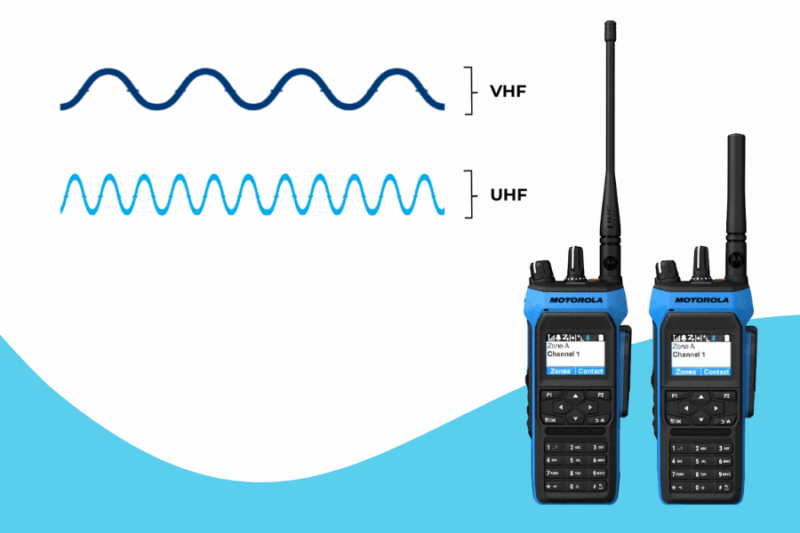
When you’re choosing two-way radios for your organisation, one of the key decisions is which frequency band suits your environment best. Your surroundings and how the radios will be used have a big impact on performance and clarity.
At SFL Mobile Radio, we work with clients across industries from construction and logistics to education and hospitality. One of the most common questions we’re asked is whether VHF or UHF radios are the right choice.
Below, we break down the differences and what each type is best suited for.
Licence-Free vs Licenced Radios
Before comparing frequencies, it’s worth noting that radios are available in licence-free (PMR446) and licenced versions.
Licence-free radios are ideal for smaller sites such as schools, shops, and leisure facilities. They’re simple to set up and don’t require an Ofcom licence, though they have a limited range and can experience interference from nearby users operating on the same frequencies.
Licenced radios offer longer range, more reliable coverage, and dedicated channels. These are better suited to larger sites or teams that rely on clear communication without interruptions. Once you decide on a licenced setup, you’ll then choose between VHF and UHF frequencies.

What’s the Difference Between VHF and UHF?
The main difference lies in how each signal travels. Both have strengths in specific environments, so understanding your site layout helps you make the right decision.
VHF (Very High Frequency)
VHF operates between 137 MHz and 175 MHz for UK business users, using longer wavelengths that travel further over open ground and water. These waves follow the earth’s surface more easily, making them ideal for outdoor environments with clear line of sight. However, they’re less effective at penetrating solid materials like concrete or metal.
-
Performs best in open spaces with few physical barriers.
-
Can struggle in built-up or heavily wooded areas where the signal may be blocked or reflected.
-
Provides greater range in rural or wide, flat landscapes.
Typically used for:
-
Agriculture and farming
-
Outdoor events
-
Marine and coastal communication
UHF (Ultra High Frequency)
UHF works in the 403 MHz to 527 MHz range and has shorter wavelengths, which allows signals to bounce and bend around obstacles such as buildings, walls, and vehicles. This makes UHF better for urban or indoor use, though its shorter range means it doesn’t travel as far in open spaces.
-
Designed for use in enclosed or built-up spaces.
-
The shorter wavelength helps the signal pass through walls, metal, and other obstacles.
-
Delivers stronger coverage inside buildings and urban areas.
Typically used for:
-
Construction and manufacturing sites
-
Warehouses and factories
-
Schools, hospitals, and hotels
-
Retail and hospitality venues
Mixing Radio Types
If you’re expanding an existing fleet, it’s important that all devices operate on the same frequency band.
VHF and UHF radios can’t communicate directly with each other, so matching them ensures compatibility across your system.
VHF and UHF radios use antennas tuned to their specific frequency range but they’re not interchangeable. A mismatched antenna can cause poor signal strength, reduced range, or even damage the radio’s transmitter.
Choosing the Right Option
Selecting the correct frequency can make a big difference to signal quality and overall reliability. If you’re unsure which band is best for your environment, our team can help assess your site and recommend the most effective solution.
At SFL Mobile Radio, we supply both VHF and UHF licenced radios from leading brands including Motorola, Hytera, and Kenwood.
Accreditations